
Toddler’s First Dental Visit: A Dentist Mom’s Guide to a Tear-Free Appointment

Let’s be completely honest: just the thought of walking into a quiet, sterile clinic with an unpredictable toddler is enough to make any parent break a sweat.
I know this from both sides of the chair. As a practicing dentist, I hold the mirror and see every type of reaction imaginable. But having recently celebrated my own daughter’s fifth birthday, I also know the exact anxiety of sitting in the waiting room, just praying your child opens their mouth without a fight.
Whether you are bringing them in at age one or running a little late to the game, you are doing a great job simply by showing up.
“Your child’s first dental visit isn’t about perfect behavior—it’s about building trust, confidence, and healthy habits that last a lifetime.”
— Dr. Ranjita
What Happens During the First Dental Visit?
Most first visits are simple and gentle. The dentist will count your child’s teeth, check their gums, look for early signs of cavities, and discuss brushing habits, diet, and fluoride. In many cases, the visit is more about helping your child feel comfortable than performing any treatment.
According to pediatric dental recommendations, children should have their first dental visit by their first birthday or within six months of their first tooth erupting. Early visits help prevent cavities, monitor development, and build positive dental experiences from the start.
Here is your zero-guilt, practical playbook to make that first visit smooth, tear-free, and maybe even a little fun.
Let’s start with something simple you can do before you even leave the house.

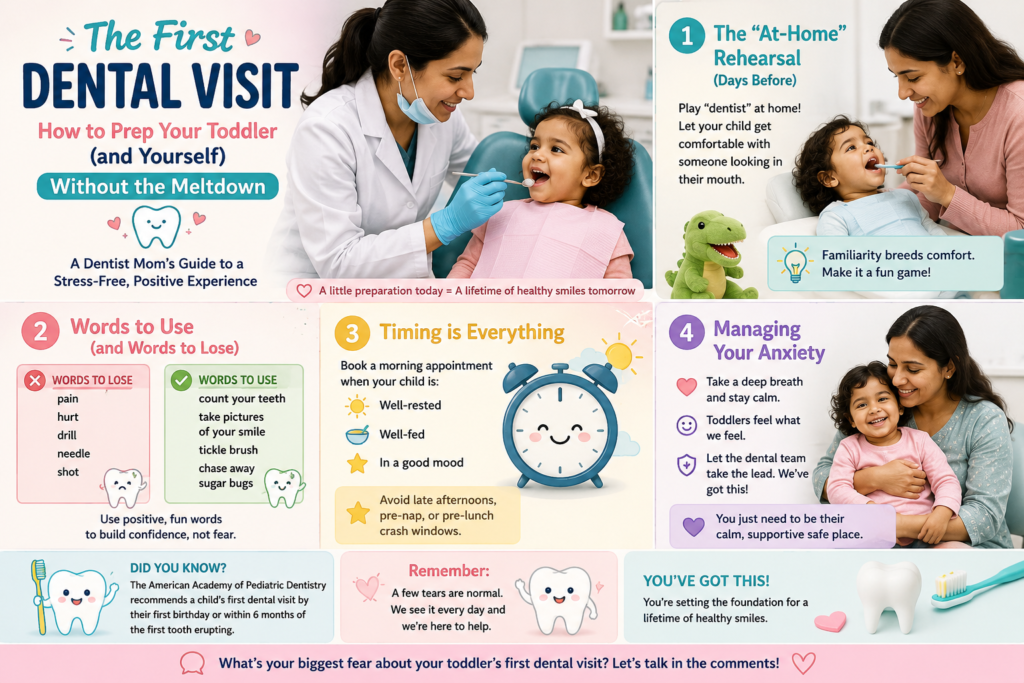
1. Practice Playing Dentist at Home
Do not let the clinic be the first time your child experiences someone looking in their mouth. A few days before the appointment, start playing “dentist” at home. Have your toddler lie back on the couch or across your lap. Grab a clean toothbrush and a flashlight, and make a game out of “counting” their teeth.
Switch roles, too! Let them use a toothbrush to count your teeth or their favorite stuffed animal’s teeth. Familiarity breeds comfort. By the time they are in the actual dental chair, the physical sensation of leaning back and opening wide will feel like a game they already know how to play.
2. Positive Words That Help Toddlers Feel Safe
How we talk about the visit completely shapes a child’s expectation. Well-meaning parents often say things like, “Don’t be scared, it won’t hurt!” Unfortunately, a toddler’s brain only processes the words “scared” and “hurt.”
The Words to Lose: Never use trigger words like pain, hurt, drill, needle, or shot. The Words to Use: Borrow my clinical script instead. Tell them the dentist is going to “count your teeth,” “take a close look at your smile,” and use a special “tickle brush” to chase away the “sugar bugs.” Keep the vocabulary light, positive, and completely non-threatening.

3. Timing is Everything
When booking the appointment, your child’s schedule dictates everything. The golden rule of pediatric dental visits is to secure a morning time slot.
You want to bring them in when they are fresh, well-rested, and fully fed. Avoid late afternoon appointments, and at all costs, avoid the dreaded pre-nap or pre-lunch crash windows. A tired toddler in a new environment is a recipe for a meltdown before you even check in at the front desk.
4. Managing Your Anxiety
This might be the most important tip on the list: toddlers are absolute emotional sponges. If you are white-knuckling the armrest, sweating, and radiating anxiety, your child will immediately assume there is something to be terrified of.
Take a deep breath and project a calm, upbeat energy. And please, give yourself permission to step back. Let the dental team take the lead. We are highly trained to navigate toddler emotions, distract them, and get the job done quickly. You do not have to manage the whole appointment—you just have to be a supportive, smiling presence in the room.
Final Thoughts on Your Toddler’s First Dental Visit
A child’s first dental visit doesn’t have to be stressful. With a little preparation, positive language, and realistic expectations, you can help your toddler build healthy dental habits that last a lifetime. Remember, if there are a few tears, it is completely normal. Dental professionals see it every single day, and we absolutely do not judge you for it.
🦷 Dentist Mom’s Take
As both a dentist and a mom, I want to leave you with one reassuring thought: your toddler doesn’t need to be “perfect” at their first dental visit. They might cry, cling to you, or refuse to open their mouth—and that’s okay.
The goal of that first appointment isn’t a flawless examination. It’s about helping your child see the dental clinic as a safe, friendly place and beginning a relationship built on trust. Every positive experience, no matter how small, is a step toward a lifetime of healthy smiles.
Before You Go…
📌 Save this guide for your child’s first appointment.
❤️ Share it with another parent who might be feeling nervous.
💬 Have a question? I’d love to hear about your experience in the comments.
Frequently Asked Questions
At what age should a child first visit the dentist?
Most dental organizations recommend scheduling a child’s first dental visit by age one or within six months of the first tooth appearing.
What happens during a toddler’s first dental appointment?
The dentist will usually examine the teeth, gums, and jaw development, discuss oral hygiene habits, and answer parents’ questions.
Is it normal for toddlers to cry at the dentist?
Yes. Many toddlers cry simply because they are in a new environment. Dental teams are trained to help children feel comfortable and safe.
“I’d love to hear from you! If you’re navigating the toddler years right now, what’s your biggest fear about bringing your little one to the dentist? Drop a comment below—let’s talk about it!”
Disclaimer: This article is intended for educational purposes only and should not replace professional dental advice. If you have concerns about your child’s oral health, consult your dentist.
About the Author
Dr. Ranjita is a practicing dentist, mother, and founder of Smiles & Shadows. She believes that healthy smiles begin with informed, confident parents. Through her blog, she shares evidence-based dental advice, practical parenting tips, and honest reflections from life both inside and outside the dental clinic.